
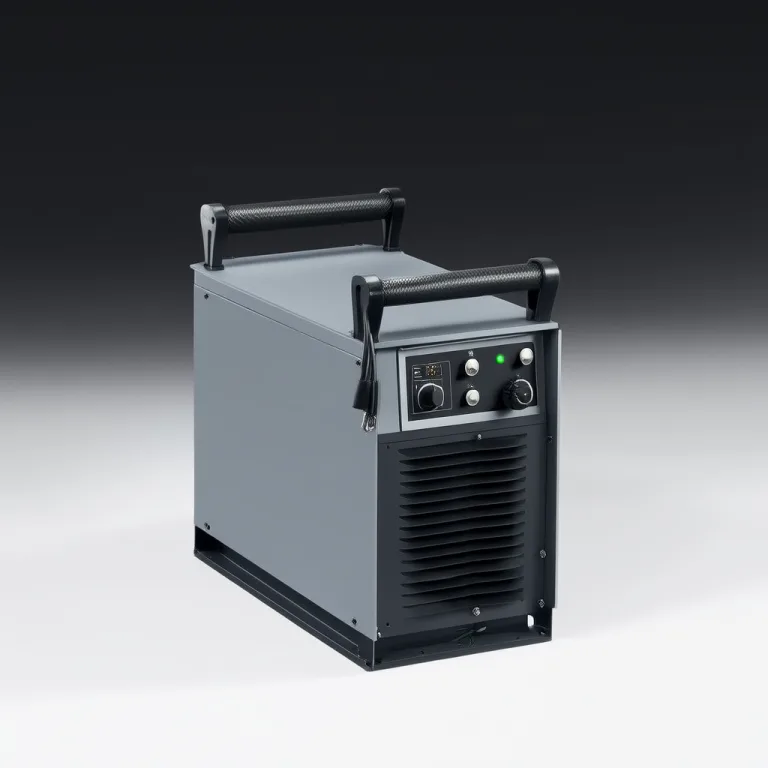
Industrial Welding Machine
Industrial Welding Machine for industrial applications.
About Industrial Welding Machine
Industrial Welding Machine for industrial applications.
| Domain | welding |
|---|---|
| Product Family | Welding Equipment |
Who Works With Industrial Welding Machine?
10 engineering roles are connected to Industrial Welding Machine based on verified research evidence.
Welder
Welder is a widely recognized, standardized occupational title defined by O*NET and national labor classifications. In the context of MIG welding equipment (e.g., SYNMIG 200 AMP MIG INVERTER), welders directly operate the machine, inspect weld quality, and troubleshoot operational issues (e.g., wire feed, arc stability, gas flow). The term 'Welders' is the plural form of the professional role 'Welder', not a department, company, or task.
Brazer
Brazers (or Brazer, singular) is a recognized O*NET occupational title (SOC 51-4121) under Production Occupations. While distinct from welders, brazers perform similar metal-joining tasks using filler metals with lower melting points than the base metal. In the context of welding equipment catalogs (e.g., MIG welders), brazers may select, operate, and inspect brazing-capable equipment — especially multi-process or hybrid machines. Though SYNMIG 200 is MIG-specific, brazers are part of the broader metal fabrication workforce that interacts with welding/brazing equipment ecosystems.
Welding Technician
Welding Technician is a widely recognized, standardized occupational title (e.g., O*NET SOC 51-4121, ISO 14731, AWS QC1) with defined competencies in thermal cutting processes—including plasma cutting—as part of broader welding/fabrication workflows. Though the product context is plasma cutting equipment, 'Welding Technician' is not product-specific; it denotes a general trade role that routinely operates, maintains, and troubleshoots plasma cutters in industrial fabrication settings. Evidence from Missouri S&T confirms integration of plasma cutting into welding technology curricula, reinforcing its inclusion within this role’s scope.
Solderer
Solderer is a formally recognized occupational title in the U.S. Bureau of Labor Statistics (Occupational Outlook Handbook) and O*NET, classified under 'Welders, Solderers, and Brazers'. While distinct from welding (which uses higher temperatures to melt base metals), soldering is a closely related metal-joining process often performed using specialized equipment—including industrial soldering stations, reflow ovens, or hybrid welding/soldering systems. In the context of industrial welding machines and equipment, a Solderer may operate, inspect, or troubleshoot soldering-capable equipment or adjacent thermal joining systems; they are not designers or manufacturers but end-users applying the technology. The role is not product-specific (e.g., no embedded product name), and 'Solderer' is the canonical, standardized occupational title.
Machine Operator
This is a formally recognized U.S. Department of Labor (O*NET/CareerOneStop) occupational title. While broad in scope (covering cutting, punching, and pressing), the evidence explicitly links it to plasma cutting equipment — including the specified DECAPOWER CUT series and CUT80 Air CNC Plasma Cutter Torch. Within the welding/cutting domain, these workers directly operate, monitor, inspect, and troubleshoot plasma cutting machines. 'Machine Operator' is the canonical, generalized professional role; 'Metal Cutting' is a valid functional specialization (not product-specific over-specification) because plasma cutting falls under metal cutting machinery operations.
Fabrication Technician
Fabrication Technician is a widely recognized industrial role responsible for operating, maintaining, and troubleshooting metal cutting equipment—including plasma cutters—within fabrication shops. The evidence confirms integration of plasma cutting instruction (calibration, kerf control, dross management) into their core responsibilities, directly linking them to the specified plasma cutting equipment. While 'fabrication' is broad, 'Fabrication Technician' is a standardized occupational title (e.g., O*NET SOC 51-4121, ISO 29002-2), distinct from generic 'technician' roles, and not product-specific (no embedded product name like 'CUT80 Technician').
Welding Machine Operator
CNC Welding Machinery Operator is a recognized industrial operations role specializing in operating computer-numerically-controlled welding equipment; it maps directly to the broader, standardized occupational title 'Welding Machine Operator' (O*NET SOC 51-4121, ISO 10018:2012 reference for welding personnel roles). The 'CNC' modifier indicates specialization in programmable welding machinery — relevant to industrial welding machines — but does not constitute a distinct profession. The role is operationally central to using the product (Industrial Welding Machine) and may involve setup, parameter verification, cycle monitoring, and basic troubleshooting.
Research and Development Technician
R&D Technician is a widely recognized technical role supporting innovation in engineering domains; in the welding context, it directly contributes to developing, testing, and refining welding equipment and processes (e.g., advanced joining technologies). The role is not product-specific (no welding- or machine-embedded modifier), and 'R&D Technician' is standardized across industrial sectors including manufacturing and power systems.
Technician
Technician is a widely recognized professional role in HVAC engineering, explicitly referenced in ASHRAE guidance for cooling tower systems. While generic, it denotes a credentialed, hands-on technical role responsible for installation, commissioning, operation, inspection, maintenance, troubleshooting, and testing of HVAC equipment including cooling towers. It is not product-specific (e.g., no 'Cooling Tower Technician' prefix), so product_specific_title = false. The role is distinct from engineers or operators and falls under the Maintenance family with broad technical execution responsibilities.
Welding Inspector
Weld Procedure Qualification Tester is a functional title describing a role that performs standardized qualification tests per ASME IX, ISO 15614, or AWS D1.1 to verify welding procedures. While not always a standalone job title in HR classifications, it maps directly to the widely recognized professional role of Welding Inspector (e.g., AWS CWI, ASNT Level II/III NDT personnel involved in procedure qualification). The role is intrinsically tied to testing weld procedures — not the welding machine itself — but in context of industrial welding equipment, this person validates that the machine (and associated parameters) can produce qualified welds. 'Weld Procedure Qualification' is a formal technical activity; 'Tester' here denotes an authorized individual performing verification, aligning with inspector/tester functions.