
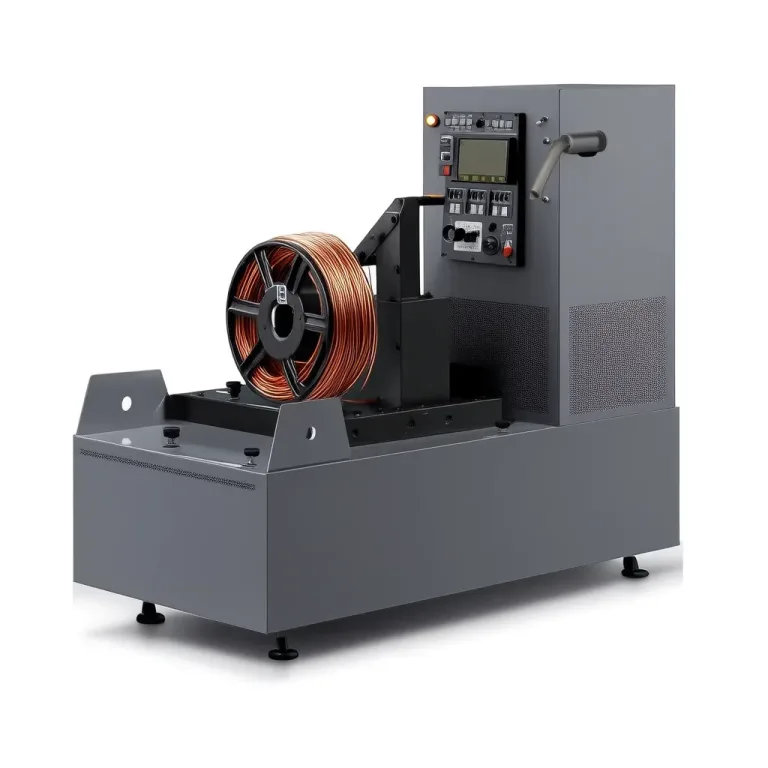
Submerged Arc Welder
Aotai Welding Machine for Aluminum Submerged Arc Welding Machine MZ-630 — industrial heavy-duty welding
About Submerged Arc Welder
Aotai Welding Machine for Aluminum Submerged Arc Welding Machine MZ-630 — industrial heavy-duty welding
| Domain | welding |
|---|---|
| Product Family | Arc Welding Equipment |
| Engineering Function | Performs arc welding using a continuously fed consumable electrode and a blanket of granular fusible flux to protect the weld zone from atmospheric contamination |
Who Works With Submerged Arc Welder?
5 engineering roles are connected to Submerged Arc Welder based on verified research evidence.
Welder
Welder is a widely recognized, standardized occupational title defined by O*NET and national labor classifications. In the context of MIG welding equipment (e.g., SYNMIG 200 AMP MIG INVERTER), welders directly operate the machine, inspect weld quality, and troubleshoot operational issues (e.g., wire feed, arc stability, gas flow). The term 'Welders' is the plural form of the professional role 'Welder', not a department, company, or task.
Welding Operator
MIG welder operators are a recognized occupational category per BLS.gov, with standardized duties tied to semi-automatic arc welding equipment. While 'MIG welder operator' references a specific process (GMAW), the canonical professional role is 'Welding Operator', a broadly recognized title in manufacturing and industrial engineering. The specialization 'MIG' is valid and retained as such — it reflects a widely accepted process-specific competency within welding operations, not an artificial product-specific title. The role directly operates, inspects, maintains, and troubleshoots MIG welding machines like the SYNMIG 200 AMP unit.
Welding Technician
Welding Technician is a widely recognized, standardized occupational title (e.g., O*NET SOC 51-4121, ISO 14731, AWS QC1) with defined competencies in thermal cutting processes—including plasma cutting—as part of broader welding/fabrication workflows. Though the product context is plasma cutting equipment, 'Welding Technician' is not product-specific; it denotes a general trade role that routinely operates, maintains, and troubleshoots plasma cutters in industrial fabrication settings. Evidence from Missouri S&T confirms integration of plasma cutting into welding technology curricula, reinforcing its inclusion within this role’s scope.
Brazer
Brazers (or Brazer, singular) is a recognized O*NET occupational title (SOC 51-4121) under Production Occupations. While distinct from welders, brazers perform similar metal-joining tasks using filler metals with lower melting points than the base metal. In the context of welding equipment catalogs (e.g., MIG welders), brazers may select, operate, and inspect brazing-capable equipment — especially multi-process or hybrid machines. Though SYNMIG 200 is MIG-specific, brazers are part of the broader metal fabrication workforce that interacts with welding/brazing equipment ecosystems.
Metal Fabricator
Metal fabricator is a widely recognized occupational title in industrial manufacturing, especially in welding and metalworking contexts. Per BC Ministry of Education's 'Welding and Metal Fabrication' curriculum, metal fabricators are trained professionals who cut, shape, assemble, and weld metal components — directly engaging with arc welding equipment like the Aotai MZ-630. They operate, maintain, troubleshoot, and install welding systems as part of fabrication workflows. The term is not product-specific (no embedded product name), and 'fabricators' is the plural form of the standard occupational title 'Metal Fabricator'.